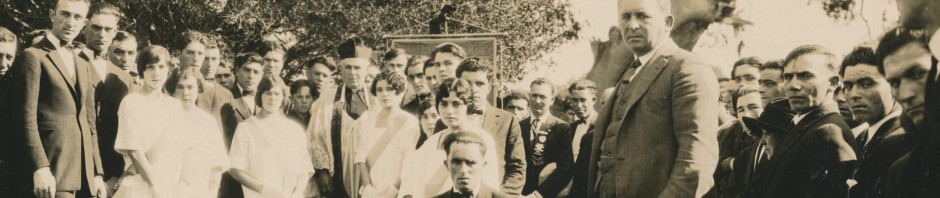
New document: Spain’s Lost Children in West Virginia (1916), Part One.

The Spaniards in West Virginia:  Discovery of 3000 compatriots.  A center of anarchism: No consul, no schoolmaster, and no priest

By Alfonso de Castilla in Las Novedades, NY, February 24, 1916

[translated by Veronica Carchedi.  Thanks to Suronda González for helping us track down the original document.  Scroll down to see original Spanish]

Confessions of an anarchist

spelterSign59“… in Clarksburg, Thursday at ten. I’ll be waiting for you at the hotel, “The Waldo.” I have to introduce you to a barber …”

Those are the exact words used by my anonymous confidant to set up our appointment. It seemed like a sensational scoop. I was being offered, through a trustworthy channel, interesting revelations.: an anarchist wanted to speak to me.

How could I not go? I left for Clarksburg – the heart of West Virginia – and I stayed at “The Waldo.” My stay, although brief, was intense with emotion: a very deep and very intimate emotion, very much from the soul. This intense emotion is what I hope to convey today to my readers in these lines written on the fly.

Punctual, like a good Englishman, the man – who is Spanish – appeared at “The Waldo.”

He approached me, sure he was not making a mistake, and in Castilian, with a slight Asturian accent, holding out his right hand he said:

 “I knew that you would come … Did my letter surprise you? Well now I just have to introduce you to the barber.”

The man spoke quickly, nervously, as if wishing to finish as soon as possible, and I was about to ask he why he was in such a hurry.

I did not need to ask the question: he beat me to it, once we were outside the hotel.

“Let’s go to Grasselli. No one will recognize me there, and that is where I will introduce you to the barber. In Clarksburg it is not in our interest to be seen together.”

“Why?” I finally ventured to ask him.

“Because …” he murmured almost between teeth, “We Spanish here are considered anarchists …”

“What do you mean anarchists?”

 “Yes, sir, yes, as anarchists … Or ‘ácratas’. You can say it either way, according to something I just read in the ‘Working Class Culture [Cultura Obrera].’”

“And what ‘Culture’ is that?”

“The [anarchist newspaper] “Cultura Obrera” of New York … It is our Spanish language textbook. It not only the journal with the largest circulation, it is, in fact, the only publication in our language that reaches us.”

“And as is clear from your words, the seed gives fruits …”

“That is right. But its better for us not to talk about those fruits: it will be enough for you to see them.”

“But, you …”

“I am a believer.”

“In the value of those fruits?”

“Now that no one can hear us, I will tell you that no. But one has to live,  my friend! And here the ones who live are the ones who know. Would you like me to tell you what those who know know? Well … whatever that “Cultura Obrera” says, at least for those who know how to read. Those who can’ read listen to it being read aloud.

“Are there many of you?”

“In Clarksburg there are three thousand, mostly Asturians.”

“How many inhabitants does Clarksburg have?”

“Some nine thousand. But this town is industrially the most important in West Virginia, and in its surroundings there are many zinc smelters, and tin factories, crystal, ceramic, and coal  for electric light, that employ more than twenty-five thousand workers. The principal centers that I remember are Grasselli, North View, Meadowbrook, Adamston, Kelley Hill and Norwood. The important ones are the zinc smelters of the “Grasselli Chemical Company,” in Grasselli and in Meadowbrook the “Clarksburg Zinc,” in North View the tin-plate factories of “Phipps Sheet and Tin Plate” in Kelly Hill the “National Carbon” ones in Grasselli, the crystal factories of “Lafayette Glass” and “Peerless Glass,” in Adamston the “Tuna Glass” and the “West York Glass,” in Clarksburg the “Norwood Glass” and the “Pittsburg Plate Glass,” in Norwood the “Hayel Atlas” the “Owens Bottle” the “Clarksburg Pottery,” the “McNocoll Pottery …”

We arrived to Grasselli. It’s a large town but not urbanized. There are no streets, and the houses, in capricious disorder, are not numbered. Each one of them is designated by the name of the head of the family that lives there.

We inquired at one house but they were Germans, and they do not understand us. We knocked on another; they were Polish… and we were Greek to them. Finally, we caught sight of a barbershop. The barbershop was Spanish. There we conversed with our barber.

The culture of the emigrants

The barber is Catalan. And this Catalan is one of the most learned men in Grasselli. We asked him:

 “How many Spaniards live in Graselli?”

“About three hundred, half of them married and not many elderly.”

“What kind of wages do they earn?”

“Between $2.25 and $5.25 a day, the same as in all these parts. They pay the most in Meadowbrook, where there are probably another three hundred Spaniards, about 80% of the workers there. The factory in Meadowbrook is the biggest of this area. Two of my good friends are there, the master Atanasio Fernández and the foreman Manuel González. They have been here many years.”

“And are they content?”

“Hombre, let me tell you. You can’t deny that they treat them well and they earn even better. When the price of zinc rose, the factory in Meadowbrook increased all the wages, without anyone even requesting a raise. From their savings, many have their own houses, and some even have land.”

“Well, then, why do they complain?”

“That’s a funny question! To gain respect. If the poor did not yell every once in a while, what would the rich do for us? The rich!”

At this point, the good barber regaled me with a harangue against Capital, against Order and against Religion.

I did not want to argue with him. The man defended his argument with the unequivocal phrase, “Read ‘Cultura Obrera’ and you’ll see how you’ll end up speaking just like me!”

I had a few more questions for the anarchist barber.

“And do you Spaniards who live in this region remain officially Spanish?”

The barber smiled somewhat ironically; who knows if he was thinking that he was a many without a country?   But he eventually deigned to answer:

“Spaniards … we do not know if we are. Spain does not have the slightest idea that we exist here. In all the United States there are only three consulates … Who knows where ours is! That’s why some of us have preferred North American citizenship because at least it will protect them. The rest do not have anyone to protect us.”

“And have you not made an effort to get at least an honorary consulate?”

“Yes, sir. It has been a few months since we last heard after we proposed to Madrid the creation of an honorary vice consulate, appointing for it a good Italian lawyer, a good friend of ours, mister Biagio Mercadino and as ambassador it seems they are going to name a Spaniard, the young Cornelio Aizpiru, a tinsmith who works in the “Sutter, Roofing & Cornice” in Clarksburg.”

“Well at least that is something.”

“Very little. What we need is a Spanish career consul. Why do we not have it? And another thing we need is the implementation of a money order service. Our savings, which should go to Spain, end up staying here! Not only do they not benefit our families, but they don’t even benefit our banks either.”

“And what about religion?”

“Most of us do not have one. Better said, even if we wanted to, we could not be more than Protestants… And that is how the few here that still retain a religious conscience have ended up.”

“But if you do not have religion, it’s not because of a lack of good education, is it?”

“Neither good nor bad; the “Cultura Obrera” is everything. But that is not for women and children and, of course, neither of these, in their immense majority, learned to read or write.”

“Then you live completely alienated from the world, and even more so from the homeland …”

“Only to a certain extent, because Clarksburg is close; and in Meadowbrook, without going much further, we even have a magnificent grocery store, which is full of Spanish products, and especially all kinds of canned food It’s better than nothing.”

“And do they force you to buy from this grocery store?”

“No, sir! You only shop there if you want, and you only buy what you want to buy.”

“And are you fraternally connected with the three thousand Spaniards who are here?”

“Are you kidding! Every one belongs only his own little group, and no one wants to know about the others. Unity goes against our temperament.”

“But in unity there is strength.”

“But we are opposed to everything that others want to impose on us by force…”

Requesting a school

We left Grasselli, returned to Clarksburg and still had time to go to Meadowbrook.

My guide spoke up again:

 “Do not doubt it, see what you see that we Spanish are moderate, hardworking and even respectful of the law… If you only met the Italians! What happens to our folk is simply that here they are influenced by some trouble-makers whose anarchist doctrines find fertile ground.”

“And to what do you attribute this influence?”

“Lack of education is the only thing to blame.”

“And you who can talk to me and guide me with so much sense: why do you not influence your compatriots so that they return to the good path?”

“Because I, sir,” he stammered slowly and perhaps with embarrassment, “no longer know which path is the right one… I am a wretch! I began like them, renouncing even God and today, married, with five children! I suffer alone, because I can tell no one, the horrible shame that my kids believe in nothing as well… Nor can they hope that someone might someday bring them faith!

“That is why I wanted you to come, for you to understand how we live, and to see if you manage to get someone to come to educate us, to wake up our conscience and our understanding. Even if it has to be a priest who only knows how to speak about God!”

Once in Meadowbrook I attended a meeting of miners, all Spaniards, who were planning — for reasons that escaped me — to call for a strike.

My companion presented me as one of them and even invited me to speak to them.

What happened next is hard to imagine. I spoke to them as brothers. I reminded them about the homeland, I evoked their parents who live far away. And I spoke to them, sincerely, of the necessity that they seek out an education, that they learn to be something more than unconscious instruments of labor.”

A voice interrupted me:

“What we need here is a Modern School [Escuela Moderna]!

And another voice added:

“Even if it isn’t modern!”

My companion squeezed my arm with intimate emotion.

“They demand that because they don’t know what they are asking for, a Modern School. In the factory where I worked, the “Clarksburg Zinc Company,” it was discovered that in North View there is a secret society of dynamiters, and they were about ready to fire all the Spanish workers! The director, even though he is Jewish, asked the Catholic Bishop of Clarksburg to intervene and speak to us…”

I did not want to hear more. Spain has in North America more than seventy thousand compatriots, abandoned, lost! Here they live without hope that Spain will hear them.

Spain, who knew how to discover a world, conquer it, and lose it, still has much left to discover.

Her own lost children.

(Las Novedades, NY, 24-II-1916)


Spelter2Los españoles en West Virginia

Descubrimiento de 3000 compatriotas

Un foco de anarquismo, sin cónsul, sin maestro y sin sacerdote

Por Alfonso de Castilla

en Las Novedades, NY

24-febrero-1916

Confesando a un ácrata

“….en Clarksburg, el jueves, a las diez. Le espero en el hotel “The Waldo”. He de presentarle a un barbero…”

Así, textualmente, me citaba la anónima confidencia. Tratábase, al parecer, de una sensacional información de periodismo. Se me brindaban, por fidedigno conducto, interesantes revelaciones: un ácrata quería hablarme.

¿Cómo no ir? Marché a Clarksburg-corazón de West Virginia- y me hospedé en “The Waldo”. Y mi estancia, aunque breve, fue intensa en emoción: una emoción muy honda, muy íntima, muy a flor de alma, que es la que hoy quisiera reflejar a los lectores en estas líneas hilvanadas al vuelo.

Puntual, como buen inglés, apareció en “The Waldo” el hombre, que es español.

Se me acercó seguro de no equivocarse, y en castellano, con ligero acento de astur, dijo, tendiéndome su diestra:

-Ya sabía que usted no faltaría..¿Le sorprendió mi carta?…Pues ahora sólo necesito presentarle al barbero..

Hablaba el hombre de prisa, nervioso, como deseando acabar cuanto antes, y a punto estuve de pedirle alguna explicación a su apresuramiento.

No tuve necesidad de hacerlo: él se me adelantó, en cuanto nos vimos fuera del hotel.

-Vamos a Grasselli. Allí nadie me conoce y allí es donde he de presentarle a ese barbero. En Clarksburg no conviene que nos vean juntos.

-¿Por qué? -me aventuré, al fin,a preguntarle.

-Porque… -murmuró casi entre dientes- a los españoles se nos tiene aquí por ácratas..

-¿Cómo por ácratas?

-Sí, señor,sí:por ácratas..o por anarquistas que de los dos modos se dice, según acabo de leer en la “Cultura Obrera”.

-¿Y qué “Cultura” es esa?

-La “Cultura Obrera” , de Nueva York…Nuestro libro de texto en castellano: la revista, no ya de mayor circulación, ¡la única! que de nuestro idioma llega hasta nosotros.

-Y según se desprende de sus palabras, la semilla está dando sus frutos..

-Así es.Pero de tales frutos vale más que no hablemos: basta con que usted los vea.

-Pero, usted..

-Yo soy un convencido.

-¿De la eficacia de esos frutos?

-Ahora que nadie nos oye, le diré que no. Pero ¡hay que vivir, amigo! Y aquí viven los que saben. ¿Y quiere usted que le diga qué saben los que saben? Pues…lo que en esa “Cultura Obrera” leen, los que aprendieron a leer, o lo que escuchan si a leer nadie les enseñó.

-¿Y son ustedes muchos?

-En Clarksburg unos tres mil: la mayoría asturianos.

-¿Cuántos habitantes tiene Clarksburg?

-Unos nueve mil. Pero este pueblo es, industrialmente el más importante de West Virginia, y en sus alrededores funcionan numerosas fundiciones de zinc, y fábricas de hojalata, cristal, loza y carbones para la luz eléctrica,llegando a más de veinticinco mil los obreros empleados en ellas. Los principales centros que ahora recuerdo son: Grasselli, North View, Meadowbrook, Adamston, Kelley Hill y Norwood. Son muy importantes las fundiciones de zinc de “Grasselli Chemical Company”, en Grasselli y en Meadowbrook la “Clarksburg Zinc”, en North View: las fábricas de hojalata, de “Phipps Sheet and Tin Plate” en Kelly Hill; las de la “National Carbon” en Grasselli: las de cristal de “Lafayette Glass” y “Peerless Glass”, en Adamston: la Tuna Glass” y la “West York Glass”, en Clarksburg; la “Norwood Glass” y la “Pittsburg Plate Glass”, en Norwood: la “Hayel Atlas”, la “Owens Bottle”, la “Clarksburg Pottery”, la “McNocoll Pottery”…

Llegamos a Grasselli. Es un gran poblado ,sin urbanizar. No hay calles ni las viviendas, en caprichoso desórden, están numeradas. Cada una de ellas se designa por el nombre del cabeza de familia que la habita.

Preguntamos en una casa: allí viven unos alemanes, y no nos entienden:preguntamos en otra: son polacos…y se hacen los suecos.

Al fin, vislumrbramos una barbería. La barbería es española. Y allí nos entrevistamos con nuestro barbero.


La cultura de los emigrados

El barbero es catalán. Y este catalán es uno de los hombres más ilustrados de Grasselli. Le interrogamos:

-¿Cuántos españoles residen en Graselli?

-Unos trescientos: la mitad de ellos casados y no abundan los viejos.

-¿Qué jornales ganan?

-Entre $2.25 y $5.25 al día: como en todos estos alrededores. Donde más pagan es en Meadowbrook, donde viven otros tantos: el 80 % de los que allí trabajan. La fábrica de Meadowbrook es la mayor de estos contornos. En ella están dos buenos amigos míos: el maestro Atanasio Fernández y el capataz Manuel González. Llevan aquí ya bastantes años.

-¿Y están satisfechos?

-Hombre..le diré. No puede negarse que se les trata bien y que cobran mejor. Cuando subió el precio del zinc, la fábrica de Meadowbrook aumentó, sin que nadie lo pidiera, todos los jornales: muchos con sus ahorro tienen casa propia, y algunos hasta tierras.

-Pues, entonces, ¿cómo se quejan?

-¡Tiene gracias la pregunta! Para hacerse respetar. Si los pobres no gritamos de cuando en cuando, ¿qué harían los ricos por nosotros? ¡Los ricos!..

El bueno del barbero, al llegar a este punto, me ofreció toda una selecta conferencia contra el Capital, contra el Orden y contra la Religión.

No quise discutirle. El hombre argumentaba con una frase contudente:-“¡Lea usted la “Cultura Obrera” y a ver si usted no habla como yo!”

-Unas cuantas preguntas más quise hacerle al ácrata barbero.

-¿Y ustedes los españoles que en toda esta región habitan ¿siguen siendo oficialmente españoles?

El barbero sonrió algo irónico, quién sabe si pensando que él no tiene patria alguna: pero dignose contestar:

-Españoles…no sabemos si lo somos. España no tiene ni la menor noticia de que existimos aquí. En todos los Estados Unidos solo hay tres Consulados…¡Cualquiera sabe dónde está el nuestro! De aquí que algunos de nosotros hayan preferido la ciudadanía norteamericana que por lo menos les protege. Y los demás no hay quien nos ampare.

-¿Y no se han hecho gestiones para conseguir ni un simple Consulado honorario?

-Sí, señor. Hace un par de meses que según hemos sabido, se propuso a Madrid la creación de un Viceconsulado honorario, indicándose para él a un buen abogado italiano, muy amigo de todos nosotros.el señor don Biagio Mercadino y como canciller parece ser que van a nombrar a un español: el joven Cornelio Aizpiru, hojalatero que trabaja en la “Sutter Roofing & Cornice”, en Clarksburg.

-Pues esto ya significa algo.

-Muy poco. Nosotros lo que necesitamos es un Cónsul de carrera y español. ¿Por qué no lo hemos de tener? Y otra cosa que nos urge es la implantación del servicio de giros postales. Nuestros ahorros, que deberían ir a España,¡se quedan aquí! Ni siquiera benefician, ya que no a nuestras familias, a nuestros bancos.

-¿Y de religión?

-La mayoría no poseemos ninguna. Mejor dicho, aunque la quisiéramos , no podríamos ser más que protestantes…Y en eso han acabado los pocos que aún conservan aquí conciencia religiosa.

-Pero si no tienen ustedes religión, no será por falta de buenas enseñanzas…

-Ni buenas ni malas:la “Cultura Obrera” es todo. Pero esta no es para mujeres y niños y ¡claro! ni aquellas ni éstos, en su inmensa mayoría, aprendieron ni a leer y escribir.

-Entonces viven ustedes completamente alejados del mundo, y mucho más de la patria nativa…

-¡Hasta cierto punto nada más, porque Clarksburg está cerca; y en Meadowbrook, sin ir más lejos, hasta tenemos un magnífico almacén de comestibles, en el que abundan los productos españoles, y especialmente toda clase de conservas…Algo es algo.

-¿Y les obligan a ustedes a surtirse de ese almacén?

-¡No, señor! Compra solo el que quiere y lo que quiere.

-¿Y están ustedes fraternalmente unidos los tres mil españoles que por aquí se encuentran?

-¡Qué hemos de estar! Cada uno pertenece a su bando, y nada quiere saber de los otros.La unión repugna a nuestro temperamento.

-Pues la unión sería la fuerza.

-Pero como nosotros nos oponemos a todo lo que se nos quiera imponer por la fuerza..


Pidiendo una escuela

Salimos de Grasselli, regresamos a Clarksburg y aún tuvimos tiempo de ir a Meadowbrook.

Mi cicerone volvió a tomar la palabra para decirme:

-No dude usted, vea lo que vea que los españoles somos sobrios, trabajadores y hasta respetuosos con las leyes..¡Si usted conociera a los italianos!..Lo que pasa a los nuestros es sencillamente que aquí están influenciados por unos trouble-makers cuyas doctrinas anarquistas encuentran campo propicio…

-¿Y a qué atribuye usted esta influencia?

-La falta de educación es la única culpable.

-Y usted, que con tanta cordura me habla y me guía, ¿por qué no influye cerca de sus compatriotas para que vuelvan por el buen camino?

-Porque yo,señor..-balbuceó lentamente y acaso con vergüenza-ya no sé cuál es ese camino…¡Soy un desdichado! Empecé como esos, renegando hasta de Dios y hoy, casado,¡con cinco hijos!..sufro a solas, porque a nadie se lo puedo contar, la pena horrible de que estas criaturas mías en nada crean tampoco..¡ni a nadie esperan que les traiga una fe!…

Por eso he querido que usted viniera, que usted se enterase de cómo vivimos, y a ver si usted consigue que alguien venga a ilustrarnos, a despertar nuestra conciencia y nuestro entendimiento ¡aunque sea un cura que no nos sepa hablar más que de Dios!…

Ya en Meadowbrook asistí a una reunión de mineros, españoles todos, que proyectaban- ignoré aún por qué- declararse en huelga.

Mi compañero me presentó como uno de ellos y hasta me invitó a que les hablase.

Fueron aquellos instantes de alucinación. Les hablé como a hermanos. Les recordé la patria, les evoqué a los padres que allá quedaron lejos..Y les hablé, sincero, de la necesidad de que se instruyeran, de que aprendiesen a ser algo más que inconscientes instrumentos de trabajo…

Una voz me interrumpió:

-¡Lo que nos hace falta es una Escuela Moderna!

Y otra voz agregó:

-¡Aunque no sea moderna!

Mi compañero me apretó el brazo con íntima emoción.

-Piden porque no saben lo que piden, una Escuela Moderna…En la fábrica donde yo trabajo, la “Clarksburg Zinc Company”, se ha sabido que en North View existe una sociedad secreta de dinamiteros ¡ y a punto han estado de despedirnos a todos los trabajadores españoles!…El director , aunque es judío, ha pedido al Obispo católico de Clarksburg que él interceda y nos hable….

No quise oír más. España tiene en Norteamérica más de setenta mil compatriotas, abandonados,¡perdidos! Aquí viven sin esperanza de que España les oiga…

A España, que supo descubrir un mundo, conquistarlo, y perderlo, aún le queda algo por descubrir.

Sus propios hijos ausentes.

(Las Novedades, NY, 24-II-1916)

Posted in West Virginia | Tagged , , , , , , | 1 Comment

Excelente reportaje de A. Treviño sobre la saga hawaiana

treviño“¿Hasta qué punto puede estar desesperada una familia para partir con tantos hijos?”

La historia de la emigración es una constante en España. Mientras ahora cientos de jóvenes, cualificados, dejan el país en busca de oportunidades, en 1907 muchos andaluces se vieron obligados a emigrar. La meta era la misma. No se trataba de vivir una aventura, sino de sobrevivir. Por aquel entonces, cientos de andaluces acudían a la oficina de Carlos Crovetto en calle Ríos de Rosa, de Málaga. A él remitía el anuncio donde se convocaba a los ciudadanos para trabajar en la caña de azúcar, pero a miles de kilómetros: en Hawái. España arrastraba la crisis de 1898, con la pérdida de Cuba. Aquella miseria, junto al latifundismo y las hambrunas en el campo español a comienzos del siglo XX, impulsaron a muchas familias a acogerse a esta oferta laboral en Hawái, con los gastos pagados del viaje. “Allí ofrecían a los varones entre 20 y 22 duros americanos. También una paga a sus mujeres e hijos, si eran mayores de quince años. También tendrían vivienda, agua y escuela gratuita. A los tres años de trabajo, si el resultado era bueno, se le cedía la casa y una fanega de tierra”, explica James Fernández, profesor de Literatura y Cultura españolas en Universidad de Nueva York. Él, junto con el periodista Luis Argeo, rastrean todos los pormenores de esta historia..

Puede leer el resto del reportaje aquí…

…aprender más sobre un destacado hijo de dos de los emigrantes, alicantinos en este caso, que es el protagonista de nuestra película documental, La paella de Daniel Albert…

…visitar nuestra página de Facebook aquí…

.. y puede visitar la página de Facebook creada y gestionada por los descendientes de los españoles pasados por Hawai aquí.


Posted in Uncategorized | Tagged , , | Leave a comment

En la prensa: Elena Cabrera escribe sobre nuestro proyecto en eldiario.es

Se buscan cuatro millones de ‘spanish-americans’ olvidados en USA

Solidaridad y discordia en la colonia española: un piquete ante la tienda de ultramarinos Casa Moneo, en el corazón de Little Spain, Calle 14. Foto cedida por la familia Cividanes.

Solidaridad y discordia en la colonia española asentada en Nueva York: un piquete ante la tienda de ultramarinos Casa Moneo, en el corazón de Little Spain, Calle 14. Foto cedida por la familia Cividanes.

En 50 años emigraron más españoles a las Américas que en los cuatro siglos anteriores. Esos 50 años de éxodo masivo no corresponden al momento álgido del imperialismo español, sino a su declive: entre 1880 y 1930.

“Poca gente lo sabe y es un dato sorprendente” explica James D. Fernández, profesor de la Universidad de Nueva York, que se ha visto absorbido por una investigación sobre la inmigración española en los Estados Unidos en la que apenas hay precedentes. Junto al asturiano Luis Argeo, dirige el proyecto en curso Ni frailes ni conquistadores, inmigración española en EEUU, del que ha brotado un primer documental audiovisual, La paella de Daniel Albert.

Tras la emancipación de Cuba en 1898, la emigración a la isla no decae, sino que se intensifica y acelera. Lo mismo suecede con otros destinos de acogida de cuatro millones de emigrantes. “Para muchos, la gran historia de la ‘obra’ de España en las Américas la constituye casi exclusivamente el relato de las hazañas de los agentes del imperio: frailes, conquistadores, exploradores, etc.

Pero hay otro relato bastante olvidado, y es la otra cara de la moneda imperial”, explica Fernández. “Podríamos decir incluso que los campesinos y obreros industriales que emigran durante este período están huyendo de las injusticias generadas por el sistema imperial y sus secuelas: la oligarquía y el caciquismo, el poder omnímodo de la Iglesia sobre sus vidas o el servicio militar obligatorio”.

Leer el resto del reportaje aquí.

Posted in Uncategorized | Tagged , , , , | Leave a comment

Paella, Pa’nosotros, Pa’todos: More news on Dan Albert’s Paella

Still from the film version of Steinbeck's "Tortilla Flat", directed by Victor Fleming, 1942.

Still from the film version of Steinbeck’s “Tortilla Flat”, directed by Victor Fleming, 1942.

On April 2, 2014, Dan Albert’s Paella/La paella de Daniel Albert was screened in Mexico City, as part of the eighth annual “Contra el silencio, todas las voces” Film Festival.

“Nuestros paisanos de Monterey,” our second “column” for the on-line magazine Puente Atlántico is now available here.

From the February 2014 bulletin of the “Friends of the Monterey Public Library”, we learn that our work in Monterey, California has helped spark renewed interest in the Spanish heritage of that part of California. The Library and the Friends of the Library are hosting a follow up to Dan Albert’s Paella event, “informally bringing together Monterey’s Spanish descendants with Library staff and volunteers to capture and preserve their family stories and memories. A second project will celebrate Monterey’s Chinese descendants through an evening at a local hotel modeled after the Dan Albert Paella event.”  We are delighted to have contributed our grain of sand (or rice) to such an exciting development.

Several colleges and universities have purchased DVDs of Dan Albert’s Paella for classroom use, among them:  Boston University; Clemson; Oberlin; Ohio State; Princeton; Rollins;  U Illinois Urbana-Champaign; UMass, Boston; Sam Houston State; Williams.  Our ad, promoting institutional purchases of the DVD is in the current issue of Hispania, the quarterly publication of the American Association of Teachers of Spanish and Portuguese.

High schools and colleges can purchase the DVD at a higher price, but with a license for public exhibition and classroom rights.

High schools and colleges can purchase the DVD at a higher price, but with a license for public exhibition and classroom rights.

Finally, you can support our work by purchasing a DVD of our documentary for home use ($20.00) here:


Posted in Uncategorized | Leave a comment

La paella de Daniel Albert

carátulaOur first documentary —Dan Albert’s Paella/ La Paella de Daniel Albert— has been generating interest and dialogue in Spain these days.  Luis Argeo accompanied the film to its Spanish debut in the Alcances Film Festival in Cádiz in 2013; on March 9, 2014, both Argeo and co-director James D. Fernández were present at a screening and discussion at the Centro Niemeyer in Avilés, and on March 18, at the Instituto Internacional in Madrid.  Fernández will be discussing aspects of the documentary when he delivers his lecture “Memorias quebradas:  La Guerra Civil Española entre los descendientes de emigrantes españoles en EEUU” on March 27 at Madrid’s Consejo Superior de Investigaciones Científicas.

Because of this interest, we have finally gotten around to setting up an autonomous web page for the Dan Albert Project; this wordpress page will eventually include copious background information on the subject of the film itself, as well as press clippings and teaching tools for educators who would like to use the film in their classes.  We are delighted to report that the following colleges and universities, among others, have ordered the DVD for their libraries:  Boston University; Clemson; Oberlin; Princeton; Rollins; University of California, Davis; University of Illinois, Urbana-Champaign; Sam Houston State; U Mass, Boston;

Please visit it the page and tell us what you think.

http://lapaelladedanielalbert.wordpress.com/

csic

Posted in Uncategorized | Leave a comment

New document: Report from Spanish Consul (San Francisco) on Labor Unrest in Vacaville, California, November 28, 1932

Image

November 28, 1932

Situation of Spanish laborers in Vacaville

Most Excellent Sir:

On the 26th of this month I received a phone call from the Sheriff of the county to which the town of Vacaville belongs.  He told me that the Spanish field workers had gone on strike, and caused disturbances in the town.  Two people were wounded and one of the Spanish aggressors has been arrested.

The next day, I set out at dawn for Vacaville, to learn more about the situation, and to try to give reasonable advice to the Spanish colony that lives there.

Upon arriving to the town, I headed to a Spanish business where several of the strikers were meeting.  I asked them about the causes of the strike […]

Once the workers had shared with me their desires, I got in touch with the ranchers who employ them.  The ranchers conveyed to me that they are not willing to enter into negotiations with the Spanish workers if the talks are mediated by the communist organizations that had sent their delegates to Vacaville, but that they would be pleased to meet with representatives of the Unión Española de Beneficiencia de Vacaville, with whom they would discuss future work conditions.

I again convened the Spanish colony in the headquarters of that Society; roughly one hundred Spaniards attended.  I explained to them the attitude of the ranchers, and advised them to look after their own best interests.  At that point I considered my work to be done, and the Spaniards who were gathered there gave me a unanimous ovation.

Today’s news is that the laborers have still not returned to work.

Although, as I have told Your Excellence, I cannot really intervene in this matter, because it is a struggle between workers and bosses, I have grave concerns.  The entire Spanish colony of Vacaville –some 150 families—have a stake in the outcome of this matter and are affected by the strike; and because many agricultural concerns are firing workers, I fear that the bosses might take advantage of this situation to reduce the number of employees, leaving many Spaniards without any  means of survival.

In addition, the authorities here don’t fool around when it comes to the matter of communism and its campaigns; they have told me that they are not willing to tolerate excesses and disturbances like those that took place the other day.  They regret the fact that the Spanish colony has been riled up by communist elements, because until now the Spaniards have enjoyed an excellent reputation.  The authorities said that  if the Spaniards continue paying attention to the agitators, the authorities will have to undertake decisive action.

Moreover, it just so happens that the majority of Spaniards that make up the colony here have entered the US illegally. I wouldn’t be surprised, therefore, if the authorities were to deport them, thus eliminating all agitation, but at the same time harming our countrymen in a way against which we would have no recourse.

I trust, nonetheless, that the prudent elements of the colony will prevail, and that they will abandon the agitators and enter into negotiations with the ranchers to return to work.

In any event, I must tell Your Excellency that the current situation worries me, as it could precipitate decisive action from the authorities, which could both harm and discredit our colony.

Consul General [of San Francisco]

Alvaro de Aguilar

 *********************

28 de noviembre de 1932

Situación de obreros españoles en Vacaville

Excelentísimo Señor,

El día 26 del corriente recibí un aviso telefónico del Chérif del Condado a que pertenece el poblado de Vacaville, manifestándome que los obreros españoles del campo se habían declarado en huelga y habían ocasionado disturbios en el poblado, ocurriendo en ellos 2 heridos y verificándose la detención de uno de los españoles agresores.

Al día siguiente de madrugada emprendí el viaje a Vacaville para enterarme de la situación y tratar de aconsejar sensatamente a la colonia española allí residente.

A mi llegada al poblado me dirgí a un comercio español en el que estaban reunidos varios de los huelguistas, y les pregunté la causa de la huelga […]

Habiéndome los obreros comunicado sus deseos, me puse en relación con los rancheros que los emplean y estos me comunicaron que no estaban dispuestos a entrar en negociaciones con los obreros españoles por intermedio de las organizaciones comunistas que habían enviado sus delegados a Vacaville; pero que sí lo harían gustosos si les enviaban una representación de la Unión Española de Beneficiencia de Vacaville, con quienes discutirían las futuras condiciones de trabajo.

Nuevamente convoqué a la colonia española en el local de dicha Sociedad, y les reuní en número de un centenar, explicándoles la actitud de los rancheros, aconsejándoles viesen por sus intereses, y dando por terminada mi gestión que mereció unánime ovación por parte de los congregados.

Noticias de hoy son que los obreros no han vuelto todavía al trabajo.

Aunque en este asunto no tengo intervención por tratarse como digo a Vuestra Excelencia de un pleito entre obreros y patronos, de la circunstancia de estar en ello interesada toda la colonia española de Vacaville, en número de unas 150 familias, a quienes afecta este paro; y como en todas las explotaciones agícolas están despidiendo obreros, me temo que los patronos aprovechen la coyuntura para reducir el número de empleados, y se queden numerosos españoles sin medio de vida.

Por otra parte, estas autoridades no juegan con el asunto del comunismo, y con sus campañas, y me han notificado que no están dispuestos a tolerar demasías o excesos como los pasados.  Se lamentan de que la colonia española haya sido soliviantada por elementos comunistas, ya que ella gozaba de excelente reputación, pero que si siguen prestando atención a los agitadores, se verán obligados a proceder con energía.

Además, se da la circunstancia de que la mayoría de los españoles que integran la colonia han entrado ilegalmente en los Estados, y por lo tanto no me extrañaría que las autoridades procedieran a su deportación, suprimiendo de este modo toda agitación, pero ocasionando a nuestros compatriotas un perjucio contra el cual no puedo desarrollar la menor acción.

Confío, sin embargo, en que los elementos sensatos de la colonia acabarán por imponerse y abandonando a los agitadores entrarán en negociaciones con los rancheros para reanudar sus trabajos.

De todas maneras, no he de ocultar a Vuestra Excelencia que me produce cierta inquietud la actual situación, que puede ocasionar una acción enérgica por parte de las Autoridades, y que redunda en perjuicio y descrédito de nuestra colonia.

El Cónsul General [de San Francisco]

Alvaro de Aguilar

****

ImageIf you’d like to support our work documenting the history of Spanish immigrants in the US, please buy a copy of our first documentary, Dan Albert’s Paella/ La paella de Daniel Albert via our friends at La Tienda: 

http://www.tienda.com/table/products/dv-04.html

For private use only.  If you’d like to buy a copy with public screening rights for a school, college or library, please send us an e-mail to whitestonerige@gmail.com

Posted in California | Tagged , , , , , | Leave a comment

The Year in Review, 2013

villaalonsotreeAs we move into the new year, Luis and I look back with satisfaction at a very productive and enjoyable 2013, just as we look forward to what promises to be a crucial year for the development of our project. We hope you’re enjoying the results of our research, and we thank you all for your support.

December
Our archival project is featured as an “NYU Story”/ nuestro proyecto de investigación es destacado por New York University
http://www.nyu.edu/about/news-publications/nyu-stories/james-fernandez-on-the-spaniards-in-the-us.html

November
New York premiere of our first documentary “Dan Albert’s Paella/La paella de Daniel Albert” in La Nacional, New York’s oldest Spanish immigrant organization/ Estreno neoyorquino de nuestro primer documental “Dan Albert’s Paella/La paella de Daniel Albert” en La Nacional, la más antigua de las organizaciones de inmigrantes españoles en la ciudad.

October
*Preliminary fieldwork, interviews and filming of locations for our upcoming documentary about the “Spanish Villas” in upstate New York.
https://vimeo.com/79034344

*“Dan Albert’s Paella/La paella de Daniel Albert” is screened as part of Hispanic Heritage Week at Sam Houston State University in Texas.

*J. Fernandez is interviewed by film crew making a documentary about valenciano immigrants in the US.

September

“Dan Albert’s Paella/La Paella de Daniel Albert” is presented by Luis Argeo at the prestigious “Alcances” film-festival in Cádiz, Spain, and by J. Fernández at Hofstra University.

With support from La Tienda (tienda.com) we run our first photo contest: Marina Rios Free wins a $50 gift certificate and a DVD of “Dan Albert’s Paella”.

August
Our project is featured on the nightly news of Spanish public television, and in an in-depth article by Mercedes Gallego of El Correo (Vocento)

We begin editing of Tampa documentary in Piedras Blancas, Castrillón, Asturias, España.

June:
Premiere in Monterey, California of our first documentary, “Dan Albert’s Paella/La paella de Daniel Albert” at the Convention Center in Monterey. [The film is also screened during the month of June at the “Migrations” film festival in Ljubljana, Slovenia. ]

We stay on in California after the screening, to do preliminary fieldwork and filming in Winters, Vacaville, San Leandro and Placerville, California, for a future documentary about Spanish immigrants in that area.
https://vimeo.com/68911157

Our work is featured in a spread in El País, Spain’s major daily http://cultura.elpais.com/cultura/2013/06/16/actualidad/1371388462_831911.html

Luis Argeo and J. Fernández assist in the making of a documentary about Basques in New York which aired in the Basque Country. The film was made to commemorate the 100th anniversary of the founding of NY’s Centro Vasco in 1913.

April:
Documentary shoot in Tampa, Florida. Tony Carreño and Judge E.J. Salcines gave us the inside story of the history of Spanish immigrants in Tampa.
https://vimeo.com/64033205

Luis Argeo and J. Fernandez present project and “Dan Albert’s Paella/La paella de Daniel Albert” in St. Augustine, Florida, at the annual meeting of the Asociación de Licenciados y Doctores Españoles en Estados Unidos (ALDEEU).

March:

Preliminary fieldwork and location filming in Tampa, Florida, for our upcoming documentary about Spanish immigrants in what was once the “Cigar Capital of the World.”
https://vimeo.com/62341561

We enjoy our first two significant viral Facebook posts; one about Judge Emilio Núñez, the other a photo belonging to Joe Mora of a 1945 dinner held in honor of the Abraham Lincoln Brigade at the Spanish Workers’ Club in Spanish Harlem. This second photo was shared over 150 times and seen by more than 10,000 people.
https://www.facebook.com/photo.php?fbid=152166264946375&set=pb.144041909092144.-2207520000.1387925905.&type=3&theater

February:

We launch of our Facebook page, which now has over 2,000 followers, and has quickly become an important platform for our research.

January:
We launch the site you are currently visiting, “Ni frailes, ni conquistadores: Spanish Immigrants in the US”: https://tracesofspainintheus.org/

Posted in Uncategorized | Tagged , | Leave a comment

Document of the Month: Centro Asturiano (NY) 1937

centroasturianocover

A beautiful 66-page program of the “Gran Festival Artístico y Bailable” organized by the Centro Asturiano de Nueva York, Inc. (Afiliado a Sociedades Hispanas Confederadas), on Sunday, October 3, 1937.

The photographs, drawings, texts and advertisements contained in this booklet offer us an invaluable snapshot of New York’s Spanish “colonia” just one year and a few months after the outbreak of the horrific Civil War.  Of particular interest are the reproductions of drawings by the great Galician artist and intellectual Castelao, with commentary by J. Castilla (pp. 53-55), and the appeal for help made on p. 63 to immigrants on behalf of the Sociedades Hispanas Confederadas.

We are pleased to make this document available, to be viewed and/or downloaded, free of charge.  The document was kindly donated by Blanche Agate.  ¡Gracias, Blanche!

Click here to view and/or download this priceless piece of our history.  And please let us see your reactions to the document by leaving comments. 


Posted in New York | Tagged , , , | Leave a comment

“Ni frailes ni conquistadores” update

lanacionalestrenoNew York Premiere of “Dan Albert’s Paella/La paella de Daniel Albert”:  Friday, November 8, 7:00 pm at Centro Español/La Nacional, 239 West 14th Street.

We’re in the midst of a very busy and productive fall season.  In just the last couple of weeks we’ve scouted locations and done preliminary interviews for “Todo el mundo a las Villas,” our project on the Spanish boarding houses in the Plattekill, NY area, and we’ve made a quick trip to Tampa to tie up some loose ends on the “Legacy of Smoke:  Spanish Immigrants in Tampa” chapter.  The Tampa film will most likely be premiered in Tampa in late April or early May, 2014.

This Friday, November 8, at 7pm, our first documentary film “Dan Albert’s Paella” will have its New York premiere at Centro Español/La Nacional (239 West 14th Street).  Admission is $10, free for members of Centro Español; we’ll also screen a 6-minute short by Isabel Cadenas Cañón, the Spanish writer and poet who lends her voice to “Dan Albert’s Paella.”

The NY premiere has garnered two nice write-ups in the Spanish press:  El Comercio here, and La Nueva España here.

Please join us on Friday if you’re in the New York area.  And thanks for your interest and support.

Posted in Uncategorized | Tagged , , | 3 Comments

New Document: Centro Español de Tampa, Bodas de Oro, 1941.

centroespañoldetampaAn invaluable resource, this book tells the history of Tampa’s first Spanish Club from the vantage point of the organization’s fiftieth anniversary in 1941.   The large scanned document (100 megas) is in Spanish; it is a gold mine of information and images, and can be downloaded here:  Centro español de Tampa:  Bodas de Oro.

This is an experiment, so please leave a comment letting us know how the download goes, and what you think of this document.

Courtesy of Anthony Carreño.

Posted in Florida | Tagged , , , , | 8 Comments